
What Do We Believe?
New to The Bridge? Part 4
What a church believes matters.
It shapes what gets preached on Sunday mornings. It shapes how we understand God, how we think about ourselves, how we raise our families, how we walk through suffering, and how we love and serve the people around us.
So, if you're new to The Bridge—or you're considering visiting—it's fair to ask: What do you actually believe?
At The Bridge, our beliefs aren't something we've invented, and they're not something we get to change every time the culture changes. We believe God has spoken through His Word, and we want what we believe and how we live to be shaped by what He has said.
So, if you’re new to The Bridge, here are some of the foundational truths that shape who we are.
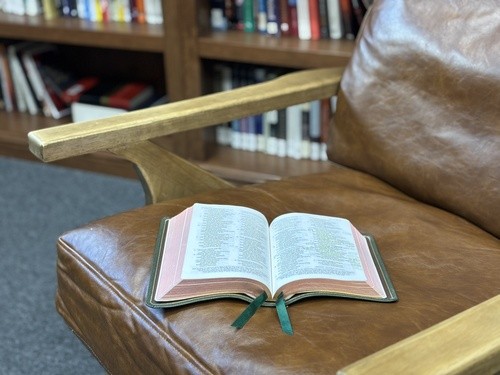
We believe the Bible is God’s Word—and our ultimate and sufficient authority.
“All Scripture is inspired by God and is profitable for teaching, for rebuking, for correcting, for training in righteousness, so that the man of God may be complete, equipped for every good work.” — 2 Timothy 3:16–17
We believe both the Old and New Testaments are inspired by God, inerrant in their original writings, and the ultimate and sufficient authority for what we believe and how we live.
The Bible wasn’t simply written by people thinking about God. Scripture says its authors “spoke from God as they were carried along by the Holy Spirit” (2 Peter 1:21). So Scripture is God's spoken word to us. And because God has spoken, His Word has the final say.
That means no church, pastor, tradition, personal experience, cultural movement, or human authority stands above Scripture. All of them must ultimately be tested by what God has revealed in His Word (Acts 17:11).
It also means we believe Scripture is sufficient. God has given us in His Word what we need to know Him, to know the way of salvation, and to faithfully follow Jesus. We don’t need to improve upon His Word, supplement it with new revelation, or soften what it says when its teaching becomes uncomfortable.
There are certainly passages we have to wrestle with carefully. Faithful Christians sometimes disagree about how particular texts should be understood and applied. But our starting point and our final appeal remain the same: God has spoken. His Word is true. His Word is enough. And His Word has the final say.
We believe in one God—Father, Son, and Holy Spirit.
“Hear, Israel: The LORD our God, the LORD is one” (Deuteronomy 6:4).
There is one God, the Creator of heaven and earth, who eternally exists as Father, Son, and Holy Spirit. Jesus commanded His disciples to baptize “in the name of the Father and of the Son and of the Holy Spirit” (Matthew 28:19).
We don’t believe in three gods, and we don’t believe that Father, Son, and Spirit are simply different ways God presents Himself. There is one God, eternally existing in three distinct Persons. And this God made us.
Christianity begins there—not with us trying to define God for ourselves, but with the God who created us making Himself known to us.
We believe Jesus Christ is fully God, fully man, and Lord of all.
John begins his Gospel with an extraordinary statement: “In the beginning was the Word, and the Word was with God, and the Word was God.” — John 1:1 Then he tells us, “The Word became flesh and dwelt among us” (John 1:14).
Jesus isn't just a teacher, prophet, moral example, or spiritual guide. He is the eternal Son of God who became truly human. We believe He was conceived by the Holy Spirit and born of the virgin Mary (Luke 1:34–35). He lived without sin (Hebrews 4:15). He died in the place of sinners, physically rose from the dead, ascended to the Father, and will personally return.
That’s why one of the earliest and simplest Christian confessions remains at the heart of what we believe: “Jesus is Lord” (Romans 10:9).
Following Jesus, then, is more than simply admiring His teachings or adding a little spirituality to our lives. We trust Him, worship Him, obey Him, and increasingly bring every part of our lives under His authority.
We believe every person is made in God’s image—and every person is a sinner who needs to be saved.
Every human being is made with tremendous dignity: “So God created man in his own image; he created him in the image of God.” — Genesis 1:27
Every human life has value because every human being is made by God and bears His image. But the Bible is equally clear about what has gone wrong. “For all have sinned and fall short of the glory of God” (Romans 3:23).
Sin is more than making mistakes or failing to become the best version of ourselves. We have sinned against the holy God who made us, and the consequence of sin is death (Romans 6:23). And that's not a problem we can fix ourselves.
Titus 3:5 says that God “saved us—not by works of righteousness that we had done, but according to his mercy.” Christianity isn’t about basically good people becoming slightly better people. We are sinners who need to be saved.
We believe salvation is by grace alone, through faith in Jesus Christ.
“For you are saved by grace through faith, and this is not from yourselves; it is God’s gift—not from works, so that no one can boast.” — Ephesians 2:8–9
We cannot earn salvation through good works, religious rituals, church membership, baptism, communion, generosity, or simply trying to live a moral life.
Salvation is God’s gracious gift that we receive through faith in Jesus. Jesus “bore our sins in his body on the tree” (1 Peter 2:24). On the cross, Christ stood in the place of sinners and bore the penalty our sin deserved. He was buried, and on the third day He physically rose from the dead (1 Corinthians 15:3–4).
Because of what Jesus has done, forgiveness and eternal life are offered to sinners who repent and place their faith in Him.
We don’t believe a church saves you. We don’t believe a sacrament saves you. We don’t believe your goodness saves you.
“There is salvation in no one else, for there is no other name under heaven given to people by which we must be saved” (Acts 4:12).
We believe the Holy Spirit gives new life and changes those who belong to Christ.
Jesus promised His followers that the Father would give them the Holy Spirit, who would be with them and in them (John 14:16–17). The Holy Spirit isn’t an impersonal spiritual force. He is God.
He convicts us of sin (John 16:8), gives new life, indwells believers, teaches us through God’s Word, sets us apart for holy living, and empowers us to follow Jesus. And His presence changes us. Galatians 5:22–23 describes His fruit as “love, joy, peace, patience, kindness, goodness, faithfulness, gentleness, and self-control.”
We believe that God is at work in His people, increasingly shaping us into the likeness of Christ through the Holy Spirit.
We believe the church belongs to Jesus.
“He is also the head of the body, the church” (Colossians 1:18).
The church does not ultimately belong to a pastor, denomination, congregation, or tradition. It belongs to Jesus. We believe everyone who has been given new life through faith in Christ is part of His church. And we believe a local church is a gathering of believers who have come together to worship, learn God’s Word, pray, serve one another, and carry the gospel into the world.
Acts 2:42 says the first Christians “devoted themselves to the apostles’ teaching, to the fellowship, to the breaking of bread, and to prayer.” That’s the kind of church we want to be.
A people shaped by God’s Word. A people worshiping Jesus. A people caring for one another. A people serving our neighbors. And a people taking the good news of Jesus beyond ourselves.
At The Bridge, we summarize that mission pretty simply: "Connecting Others to the Love of Jesus."
We believe baptism is for those who have personally trusted in Jesus Christ.
When people responded to the gospel in the New Testament, we repeatedly see the same pattern: they believed, and then they were baptized. “So those who accepted his message were baptized.” — Acts 2:41
That’s why we practice believer’s baptism by immersion.
Baptism doesn’t save us. It isn’t the means by which someone receives forgiveness or becomes a Christian. It is the public identification of someone who has already repented of sin and placed his or her faith in Jesus. Romans 6:3–4 connects baptism with Christ’s death, burial, and resurrection. Going beneath the water and coming back up beautifully pictures our identification with Jesus and the new life we have received in Him.
We aren’t baptized in order to be saved. We are baptized because Jesus has saved us.
We believe the Lord’s Supper helps us remember and proclaim what Jesus has done.
Along with baptism, Jesus gave His church the Lord’s Supper. On the night before His crucifixion, Jesus took bread and the cup and gave them to His disciples as reminders of His body and blood.
Paul explains: “For as often as you eat this bread and drink the cup, you proclaim the Lord’s death until he comes.” — 1 Corinthians 11:26 We understand the bread and cup as symbols pointing us to Christ’s body and blood. They do not repeat Christ’s sacrifice or add anything to His finished work.
Hebrews says that Jesus offered Himself “once for all” (Hebrews 10:10). So when we gather around the Lord’s Table, we remember. We give thanks. We examine ourselves. And together we proclaim that our hope rests entirely in Jesus and what He has accomplished for us. At The Bridge, we celebrate communion together on the first Sunday of every month.
We believe every person will spend eternity somewhere.
Christianity makes claims not only about this life, but about what comes after it. Jesus spoke clearly of both eternal life and final judgment: “And they will go away into eternal punishment, but the righteous into eternal life.” — Matthew 25:46
We believe those who receive Christ as Lord and Savior will live forever in God’s presence, while those who reject Him will remain eternally separated from God under judgment. That’s a sobering truth. But it’s also part of what makes the gospel such incredibly good news.
“For God loved the world in this way: He gave his one and only Son, so that everyone who believes in him will not perish but have eternal life” (John 3:16).
We believe Jesus is coming again.
Our hope isn’t ultimately that humanity will eventually figure everything out or that the world will slowly become everything it ought to be. Our hope is Jesus.
He told His disciples: “I will come again and take you to myself, so that where I am you may be also.” — John 14:3
The same Jesus who died, physically rose from the grave, and ascended to the Father will personally return. Sin will not have the final word. Death will not have the final word. Evil will not have the final word.
Jesus will come for His own and receive us unto Himself! And that future hope should shape the way we live right now.
Why Does All of This Matter?
Sometimes doctrine gets treated like something for theologians, pastors, or people who enjoy debating difficult questions. We don’t see it that way at The Bridge.
What we believe about God shapes how we worship Him. What we believe about Scripture determines whose voice has the final word in our lives. What we believe about sin shapes how we understand ourselves. What we believe about Jesus determines where we look for salvation. And what we believe about eternity shapes what we live for now.
So we believe that doctrine matters. At The Bridge, we believe that God has spoken. His Word is true and sufficient. Jesus is Lord. Every person needs to be saved. Christ died in the place of sinners and rose again. Salvation is God’s gift received through faith in Christ. The Holy Spirit gives new life and changes us. The church belongs to Jesus. And our King is coming again.
These are the foundational truths we want to know, believe, and build our lives on.
And if you’re still figuring out what you believe, we’d love to have you come open the Bible with us and see for yourself who Jesus is.
It shapes what gets preached on Sunday mornings. It shapes how we understand God, how we think about ourselves, how we raise our families, how we walk through suffering, and how we love and serve the people around us.
So, if you're new to The Bridge—or you're considering visiting—it's fair to ask: What do you actually believe?
At The Bridge, our beliefs aren't something we've invented, and they're not something we get to change every time the culture changes. We believe God has spoken through His Word, and we want what we believe and how we live to be shaped by what He has said.
So, if you’re new to The Bridge, here are some of the foundational truths that shape who we are.
We believe the Bible is God’s Word—and our ultimate and sufficient authority.
“All Scripture is inspired by God and is profitable for teaching, for rebuking, for correcting, for training in righteousness, so that the man of God may be complete, equipped for every good work.” — 2 Timothy 3:16–17
We believe both the Old and New Testaments are inspired by God, inerrant in their original writings, and the ultimate and sufficient authority for what we believe and how we live.
The Bible wasn’t simply written by people thinking about God. Scripture says its authors “spoke from God as they were carried along by the Holy Spirit” (2 Peter 1:21). So Scripture is God's spoken word to us. And because God has spoken, His Word has the final say.
That means no church, pastor, tradition, personal experience, cultural movement, or human authority stands above Scripture. All of them must ultimately be tested by what God has revealed in His Word (Acts 17:11).
It also means we believe Scripture is sufficient. God has given us in His Word what we need to know Him, to know the way of salvation, and to faithfully follow Jesus. We don’t need to improve upon His Word, supplement it with new revelation, or soften what it says when its teaching becomes uncomfortable.
There are certainly passages we have to wrestle with carefully. Faithful Christians sometimes disagree about how particular texts should be understood and applied. But our starting point and our final appeal remain the same: God has spoken. His Word is true. His Word is enough. And His Word has the final say.
We believe in one God—Father, Son, and Holy Spirit.
“Hear, Israel: The LORD our God, the LORD is one” (Deuteronomy 6:4).
There is one God, the Creator of heaven and earth, who eternally exists as Father, Son, and Holy Spirit. Jesus commanded His disciples to baptize “in the name of the Father and of the Son and of the Holy Spirit” (Matthew 28:19).
We don’t believe in three gods, and we don’t believe that Father, Son, and Spirit are simply different ways God presents Himself. There is one God, eternally existing in three distinct Persons. And this God made us.
Christianity begins there—not with us trying to define God for ourselves, but with the God who created us making Himself known to us.
We believe Jesus Christ is fully God, fully man, and Lord of all.
John begins his Gospel with an extraordinary statement: “In the beginning was the Word, and the Word was with God, and the Word was God.” — John 1:1 Then he tells us, “The Word became flesh and dwelt among us” (John 1:14).
Jesus isn't just a teacher, prophet, moral example, or spiritual guide. He is the eternal Son of God who became truly human. We believe He was conceived by the Holy Spirit and born of the virgin Mary (Luke 1:34–35). He lived without sin (Hebrews 4:15). He died in the place of sinners, physically rose from the dead, ascended to the Father, and will personally return.
That’s why one of the earliest and simplest Christian confessions remains at the heart of what we believe: “Jesus is Lord” (Romans 10:9).
Following Jesus, then, is more than simply admiring His teachings or adding a little spirituality to our lives. We trust Him, worship Him, obey Him, and increasingly bring every part of our lives under His authority.
We believe every person is made in God’s image—and every person is a sinner who needs to be saved.
Every human being is made with tremendous dignity: “So God created man in his own image; he created him in the image of God.” — Genesis 1:27
Every human life has value because every human being is made by God and bears His image. But the Bible is equally clear about what has gone wrong. “For all have sinned and fall short of the glory of God” (Romans 3:23).
Sin is more than making mistakes or failing to become the best version of ourselves. We have sinned against the holy God who made us, and the consequence of sin is death (Romans 6:23). And that's not a problem we can fix ourselves.
Titus 3:5 says that God “saved us—not by works of righteousness that we had done, but according to his mercy.” Christianity isn’t about basically good people becoming slightly better people. We are sinners who need to be saved.
We believe salvation is by grace alone, through faith in Jesus Christ.
“For you are saved by grace through faith, and this is not from yourselves; it is God’s gift—not from works, so that no one can boast.” — Ephesians 2:8–9
We cannot earn salvation through good works, religious rituals, church membership, baptism, communion, generosity, or simply trying to live a moral life.
Salvation is God’s gracious gift that we receive through faith in Jesus. Jesus “bore our sins in his body on the tree” (1 Peter 2:24). On the cross, Christ stood in the place of sinners and bore the penalty our sin deserved. He was buried, and on the third day He physically rose from the dead (1 Corinthians 15:3–4).
Because of what Jesus has done, forgiveness and eternal life are offered to sinners who repent and place their faith in Him.
We don’t believe a church saves you. We don’t believe a sacrament saves you. We don’t believe your goodness saves you.
“There is salvation in no one else, for there is no other name under heaven given to people by which we must be saved” (Acts 4:12).
We believe the Holy Spirit gives new life and changes those who belong to Christ.
Jesus promised His followers that the Father would give them the Holy Spirit, who would be with them and in them (John 14:16–17). The Holy Spirit isn’t an impersonal spiritual force. He is God.
He convicts us of sin (John 16:8), gives new life, indwells believers, teaches us through God’s Word, sets us apart for holy living, and empowers us to follow Jesus. And His presence changes us. Galatians 5:22–23 describes His fruit as “love, joy, peace, patience, kindness, goodness, faithfulness, gentleness, and self-control.”
We believe that God is at work in His people, increasingly shaping us into the likeness of Christ through the Holy Spirit.
We believe the church belongs to Jesus.
“He is also the head of the body, the church” (Colossians 1:18).
The church does not ultimately belong to a pastor, denomination, congregation, or tradition. It belongs to Jesus. We believe everyone who has been given new life through faith in Christ is part of His church. And we believe a local church is a gathering of believers who have come together to worship, learn God’s Word, pray, serve one another, and carry the gospel into the world.
Acts 2:42 says the first Christians “devoted themselves to the apostles’ teaching, to the fellowship, to the breaking of bread, and to prayer.” That’s the kind of church we want to be.
A people shaped by God’s Word. A people worshiping Jesus. A people caring for one another. A people serving our neighbors. And a people taking the good news of Jesus beyond ourselves.
At The Bridge, we summarize that mission pretty simply: "Connecting Others to the Love of Jesus."
We believe baptism is for those who have personally trusted in Jesus Christ.
When people responded to the gospel in the New Testament, we repeatedly see the same pattern: they believed, and then they were baptized. “So those who accepted his message were baptized.” — Acts 2:41
That’s why we practice believer’s baptism by immersion.
Baptism doesn’t save us. It isn’t the means by which someone receives forgiveness or becomes a Christian. It is the public identification of someone who has already repented of sin and placed his or her faith in Jesus. Romans 6:3–4 connects baptism with Christ’s death, burial, and resurrection. Going beneath the water and coming back up beautifully pictures our identification with Jesus and the new life we have received in Him.
We aren’t baptized in order to be saved. We are baptized because Jesus has saved us.
We believe the Lord’s Supper helps us remember and proclaim what Jesus has done.
Along with baptism, Jesus gave His church the Lord’s Supper. On the night before His crucifixion, Jesus took bread and the cup and gave them to His disciples as reminders of His body and blood.
Paul explains: “For as often as you eat this bread and drink the cup, you proclaim the Lord’s death until he comes.” — 1 Corinthians 11:26 We understand the bread and cup as symbols pointing us to Christ’s body and blood. They do not repeat Christ’s sacrifice or add anything to His finished work.
Hebrews says that Jesus offered Himself “once for all” (Hebrews 10:10). So when we gather around the Lord’s Table, we remember. We give thanks. We examine ourselves. And together we proclaim that our hope rests entirely in Jesus and what He has accomplished for us. At The Bridge, we celebrate communion together on the first Sunday of every month.
We believe every person will spend eternity somewhere.
Christianity makes claims not only about this life, but about what comes after it. Jesus spoke clearly of both eternal life and final judgment: “And they will go away into eternal punishment, but the righteous into eternal life.” — Matthew 25:46
We believe those who receive Christ as Lord and Savior will live forever in God’s presence, while those who reject Him will remain eternally separated from God under judgment. That’s a sobering truth. But it’s also part of what makes the gospel such incredibly good news.
“For God loved the world in this way: He gave his one and only Son, so that everyone who believes in him will not perish but have eternal life” (John 3:16).
We believe Jesus is coming again.
Our hope isn’t ultimately that humanity will eventually figure everything out or that the world will slowly become everything it ought to be. Our hope is Jesus.
He told His disciples: “I will come again and take you to myself, so that where I am you may be also.” — John 14:3
The same Jesus who died, physically rose from the grave, and ascended to the Father will personally return. Sin will not have the final word. Death will not have the final word. Evil will not have the final word.
Jesus will come for His own and receive us unto Himself! And that future hope should shape the way we live right now.
Why Does All of This Matter?
Sometimes doctrine gets treated like something for theologians, pastors, or people who enjoy debating difficult questions. We don’t see it that way at The Bridge.
What we believe about God shapes how we worship Him. What we believe about Scripture determines whose voice has the final word in our lives. What we believe about sin shapes how we understand ourselves. What we believe about Jesus determines where we look for salvation. And what we believe about eternity shapes what we live for now.
So we believe that doctrine matters. At The Bridge, we believe that God has spoken. His Word is true and sufficient. Jesus is Lord. Every person needs to be saved. Christ died in the place of sinners and rose again. Salvation is God’s gift received through faith in Christ. The Holy Spirit gives new life and changes us. The church belongs to Jesus. And our King is coming again.
These are the foundational truths we want to know, believe, and build our lives on.
And if you’re still figuring out what you believe, we’d love to have you come open the Bible with us and see for yourself who Jesus is.
Posted in Church Life, Faith, New to The Bridge
Posted in Doctrine, faith, Beliefs, Bible, Baptism, Jesus\' Return, Grace, God, Trinity
Posted in Doctrine, faith, Beliefs, Bible, Baptism, Jesus\' Return, Grace, God, Trinity